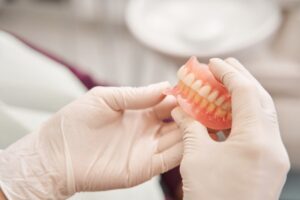
Dentures are designed to restore your ability to eat, speak, and smile with confidence after tooth loss. When they fit properly, they can significantly improve your quality of life. However, dentures don’t last forever. As your jawbone and gum tissue naturally change over time, dentures can become loose or unstable. While many people think poorly fitting dentures are simply an inconvenience, they can sometimes contribute to serious health problems if left unaddressed.
Increased Risk of Choking
One of the most immediate dangers of loose dentures is the risk of choking. Dentures that shift while eating or speaking can become dislodged, creating a potential airway hazard. Although this is uncommon, it can become a medical emergency if the denture blocks the airway or is accidentally inhaled into the lungs.
If your dentures frequently move or feel unstable, it’s important to have them evaluated before a dangerous situation occurs.
Poor Nutrition and Overall Health
Ill-fitting dentures can make chewing difficult or painful, causing many people to avoid healthy foods that require more chewing, such as fresh fruits, vegetables, and lean proteins. Instead, they may rely on softer, more processed foods that lack essential nutrients.
Over time, poor nutrition can contribute to weight loss, weakened immunity, slower healing, and other health concerns. For older adults, maintaining proper nutrition is especially important for preserving overall health and independence.
Oral Sores and Infection
Dentures that rub against your gums can create painful sores and chronic irritation. If these areas remain untreated, bacteria or fungi can enter damaged tissue and lead to infections such as denture stomatitis. While many oral infections are manageable, untreated infections may become more serious, particularly for individuals with weakened immune systems or certain medical conditions.
Regular dental visits allow your dentist to identify and treat irritation before it progresses.
Ongoing Bone Loss
After tooth loss, the jawbone naturally begins to shrink because it no longer receives stimulation from tooth roots. As the bone changes, dentures often become looser, creating a cycle of increasing instability and discomfort.
Routine denture relines, adjustments, or replacement can improve the fit of your dentures. In some cases, implant-supported dentures may provide greater stability while also helping preserve the jawbone.
Ill-fitting dentures are more than just an annoyance; they can affect your comfort, nutrition, oral health, and, in rare cases, contribute to life-threatening complications. If your dentures slip, cause persistent sore spots, make eating difficult, or no longer fit as they once did, schedule a visit with your dentist. A simple adjustment, reline, or replacement may significantly improve your comfort and help protect your overall health.
About the Author
Dr. Mohannad Abboushi is the proud owner and dentist at Premier Family Dentistry of Bloomfield. He earned his dental degree from New York University and has since become certified in Invisalign, ABLS laser therapy, and dental implants. Dr. Abboushi likes to stay current in his field through memberships in the American Dental Association, the New Jersey Dental Association, and the American Board of Laser Surgery. If you’re interested in restoring your smile with dentures, schedule an appointment online or call (973) 250-6400.